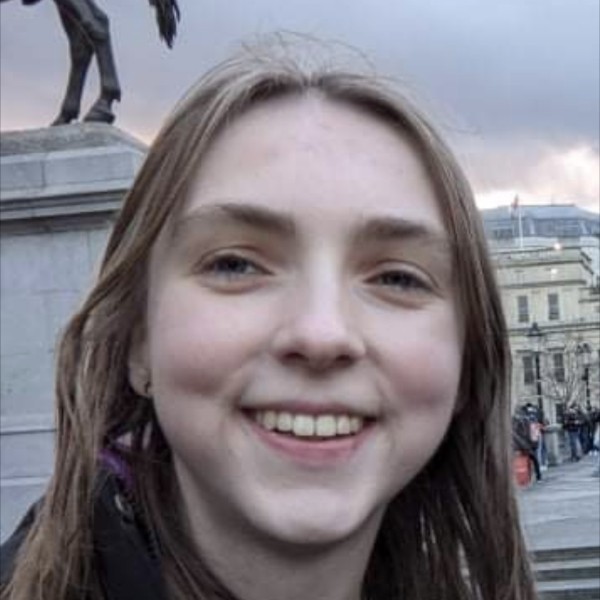
About Me
I'm a PhD student at the University of Bristol and part of the Interactive AI CDT. My research focuses on compositional generalisation in vision-language models, studying how well they can handle novel combinations of familiar concepts. I am also interested in how these models process complex ideas such as negation and spatial information and using interpretability methods to probe how these models work.
From September to November 2024, I completed a 3-month internship developing a tool using LLMs to help radiologists identify meaningful differences in reports, supporting the training of junior doctors.
Before starting my PhD, I completed my MEng in Engineering Mathematics at the University of Bristol. After graduating, I worked as a Software Engineer at Wilxite, where I built internal web applications for data management, invoicing, and other business operations.
Outside of research, you'll usually find me running, rock climbing, or at the local pub. I’m always open to interesting collaborations and good conversations about where AI is heading—feel free to reach out.
Recent Work
The Impact of Visual Input on ARC Challenges
Status: In Progress
I'm interested in how model responses to ARC reasoning questions (grid-based logic puzzles) change when models are given text-only, vision-only and vision-language inputs.
Probing Negation Understanding in Vision-Language Models With Object Attention
Status: Submitted to ACL Rolling Review
I'm investigating how vision-language models like LLaVA handle negation, by comparing how their visual attention shifts when processing positive vs. negated versions of the same sentence and how this compares to human patterns.
Semantic Similarity in Radiology Reports via LLMs and NER
Status: Paper Accepted at AI Bio Workshop at ECAI 2025
We explore how large language models can help evaluate junior radiologists' reports by identifying meaningful differences from senior-edited versions through interpretable similarity scores.
Evaluating Compositional Generalisation in VLMs and Diffusion Models
Status: Paper accepted at *SEM (co-located with EMNLP 2025)
This work explores whether diffusion models can better handle compositional generalisation than models like CLIP, especially for understanding attributes and spatial relationships in images.
Events
Foundations and Applications of Trustworthy AI
March 2026Presented a poster on negation processing in VLMs and how this compares to human patterns.
Invited Speaker at University College London (UCL)
November 2025Presented a talk on my research project: Compositional Generalisation in VLMs and Diffusion Models.
ECAI 2025 in Bologna
October 2025Oral presentation on my research project: Semantic Similarity in Radiology Reports via LLMs and NER.
Best Poster at UK AI 2025
June 2025Honored to receive the Best Poster Award at the UK AI 2025 Conference, where I presented work on using LLMs to evaluate radiology reports.